
Regional Policy

Regional Policy Dialogues

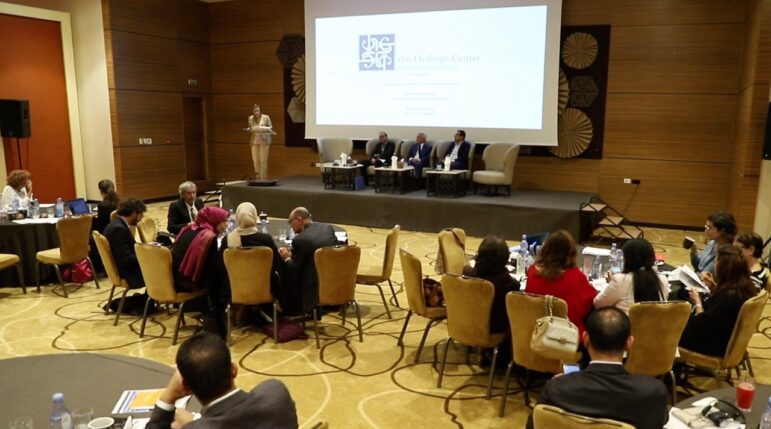
Hollings Center Regional Policy Dialogues cover consequential and challenging topics that link Muslim-majority nations and the United States.  Dialogues center on subjects that are critically relevant yet under-discussed in the public sphere. Participants have included a broad spectrum of government officials, experts on domestic and foreign policy, academics, economists, civil society leaders and practitioners.  Regional dialogues have addressed topics relating to Iran, Iraq, the Caspian Sea and Middle East television media.  Most notably, the Hollings Center has organized four Regional Policy Dialogues on Afghanistan with the assistance of the American Institute of Afghanistan Studies (AIAS).

The Economies of the Arab Spring (October 2011)

Observers of the Arab Spring have largely focused on issues of political transition, while economic issues have received less attention. To this end, the Hollings Center has brought together a select group of economists, private-sector professionals, development officials, academics, journalists and foreign policy experts from Egypt, Syria, Tunisia, Turkey and the United States to discuss the economic outlook in the wake of regime change. Discussions also addressed the issue of models and international aid.

Fundamentals of Governance in Afghanistan (June 2009)

Dialogue participants assessed the relationship across governance, security and development in Afghanistan.  Experts from Afghanistan, Europe and the United States examined Afghanistan’s hybrid legal systems, its central, provincial and local governance institutions, historical and cultural factors affecting governance and divergent understandings of “good governance” by Afghans and the international community.

Afghanistan’s Other Neighbors: Iran, Central Asia and China (July 2008)

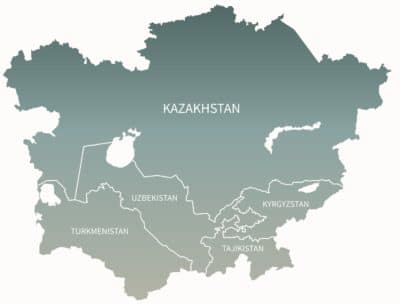
This dialogue conference focused on Afghanistan’s significant economic, cultural, and political relationships with its neighbors in the region beyond Pakistan.  Scholars, experts, and policy professionals from Afghanistan, the Central Asian Republics, the European Union, Turkey and the United States addressed Afghanistan’s impact on its neighbors, the significance of trans-national ethnicities and the effects of Afghan refugee populations on neighboring countries.

The Durand Line: History, Consequences, and Future (July 2007)

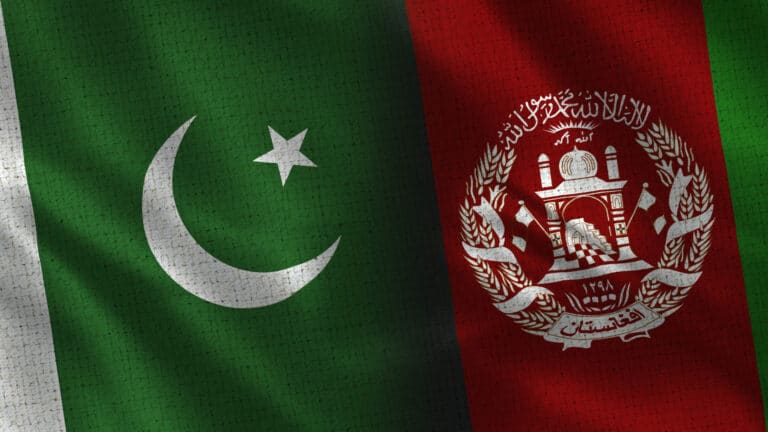
The Durand Line, the border between Afghanistan and Pakistan, has long been the site of more conflict than cooperation.  This dialogue brought together leading scholars, policy experts, and officials from Afghanistan, Pakistan, the United States and several European countries to focus on the political and legal history of the boundary, its social and economic impact, security in frontier areas and the line’s future.

Afghanistan and Pakistan: Cultural Heritage and Current Reality (May 2005)

In the midst of heightened violence, the Hollings Center convened prominent scholars from Afghanistan, Pakistan and the United States to discuss the exceedingly difficult yet promising relationship between Afghanistan and Pakistan.  Sessions focused on the sources of conflict between the two neighbors and generated ideas for dispute resolution and cooperation.

American and Iranian Studies: Bridging the Gaps between Nations and Disciplines (December 2008)

This dialogue explored whether academic and cultural exchange can reduce political tensions.  Participants discussed popular views of the United States and Iran as are held in each country, the state of Iranian studies in the United States and ways to reduce misunderstandings across American and Iranian publics.

Iraq: Unity and Diversity (October 2007)

Deep sectarian divides and different visions for Iraq’s future continue to widen rifts within Iraqi society and make advances in governance, economic progress, and stability all the more fragile.  Participants discussed Iraqi national identity, the perspective of Iraq’s neighbors, the impact of the current war on domestic politics and economics and the future of Iraq as a unitary state.  Co-organized by The American Academic Research Institute in Iraq (TAARII), this dialogue event included specialists who bridge various disciplines from Iraq, Jordan, Saudi Arabia, Syria, Turkey, the United Arab Emirates, France, Norway, the United Kingdom and the United States.

The Future of the Caspian Sea (May 2006)

Caspian Sea Dialogue  ParticipantsUnresolved questions of boundaries and legal regimes hinder ties between states bordering the Caspian Sea.  Dialogue participants explored potential areas of collaboration, addressing pollution, protecting fisheries and promoting maritime trade. In cooperation with the International Institute of Applied Systems Analysis (IIASA) in Austria, the Hollings Center convened the conference with representatives of four of the Caspian littoral states – Azerbaijan, Iran, Kazakhstan and Russia – along with experts from Canada, Europe, Turkey and the United States.

Meeting of Middle Eastern Television Professionals (February 2006)

Television plays a powerful role, reflecting and shaping public opinion in the Middle East.  With support from the Hollings Center, participants in this Search for Common Ground dialogue analyzed trends in Middle Eastern television, weighed the challenges of covering the Israeli-Palestinian conflict and discussed whether television programming can promote peace in the region.  Participants engaging in this dialogue included leading television executives from several Gulf countries, Israel, the Palestinian Authority, Turkey, the United Kingdom and the United States.

Comments are closed.